Every serious conversation about kratom eventually comes down to one word: mitragynine. It's the alkaloid the leaf has the most of, the one labs measure to say how strong a product is, and the one extract tablets are standardized to. This article covers what it is, where it comes from, how it's measured, and how it relates to the now-scheduled 7-OH. It's written for a general reader; no chemistry background needed.
What mitragynine is
Mitragynine is an indole alkaloid produced by the kratom tree, Mitragyna speciosa, a member of the coffee family native to Thailand, Malaysia, Indonesia and neighboring countries. "Alkaloid" is a broad chemical category of plant-made nitrogen-containing compounds; caffeine, nicotine and quinine are alkaloids too. Kratom leaf contains dozens of them. Mitragynine is by far the most abundant, typically accounting for around two-thirds of the total alkaloid content, which is why it's the reference compound for potency.
The molecule was first isolated in the early twentieth century and its structure was worked out in the 1960s. Since then it's been the subject of a steadily growing research literature. We're going to stay out of pharmacology claims here, because a product company can't make them and because the science is still developing; what we can do is explain the practical facts about the compound that matter to someone buying a tablet.
How much mitragynine is in kratom leaf
Less than most people assume, and more variable than most labels imply. Dried commercial leaf typically contains 0.8% to 1.8% mitragynine by weight, with occasional outliers on either side. So a gram of leaf carries somewhere between 8 and 18 mg. Variation comes from:
- Origin and growing conditions. Soil, sun, rainfall and tree age all shift alkaloid content.
- Harvest and drying. Leaf maturity at picking and how it's dried and stored.
- Strain names. "Red," "green," "white," "Maeng Da" and the rest are mostly marketing and processing labels, not reliable predictors of mitragynine content. Two "green" bags can differ more from each other than a "green" and a "red."
This variability is the reason standardized extracts exist and the subject of our tablets vs capsules vs powder comparison.
The other alkaloids
A full-spectrum extract carries more than mitragynine. The usual supporting cast:
| Alkaloid | Rough share of total alkaloids | Notes |
|---|---|---|
| Mitragynine | ~60–70% | Primary; the standardization target |
| Paynantheine | ~8–10% | Second most abundant |
| Speciogynine | ~6–7% | A mitragynine stereoisomer |
| Speciociliatine | ~1–2% | Another stereoisomer |
| 7-hydroxymitragynine (7-OH) | <0.05% of dry leaf, often far less | Minor in leaf; now Schedule I above threshold |
| Others (mitraphylline, corynantheidine, etc.) | Trace | Dozens identified |
Whether these minor alkaloids matter to the experience is the core of the full-spectrum vs isolate debate. Tempo uses a full-spectrum extract because we prefer the rounder profile, and standardizes it to mitragynine because that's the compound you can measure reliably.
Mitragynine and 7-OH
7-hydroxymitragynine is mitragynine with a hydroxyl group added at the 7-position. In the leaf it's present only in trace amounts. It can also form from mitragynine through oxidation during drying and processing, and it's a metabolite of mitragynine in the body. The 7-OH products sold in 2024–2025 contained amounts of 7-OH that no leaf could supply, which is why they were understood to be semi-synthetic.
As of August 5, 2026, 7-OH above 0.050% dry weight or 1.00 mg per unit is federally Schedule I. Mitragynine was not scheduled. Natural leaf and compliant extracts, which contain mitragynine as the main alkaloid and only trace 7-OH, remain legal federally. The practical consequence for extract products: concentration raises every alkaloid, including 7-OH, so a concentrated extract must be tested to prove it's still under threshold. Dialed's COAs show both numbers for every lot; see Is 7-OH Banned? for the rule.
How labs measure mitragynine
The standard method is HPLC (high-performance liquid chromatography), usually with UV or mass spectrometric detection. The lab dissolves a weighed sample, runs it through a column that separates compounds by how they interact with the column material, and compares the mitragynine peak against a certified reference standard. Results come back as % by weight and, for tablets, as mg per unit. The same run resolves 7-OH and the other alkaloids as separate peaks. A well-run lab reports its limit of detection and quantitation so you know how small a number it can see. Reading those results is covered in how to read a kratom COA.
What a 150 mg mitragynine tablet means in practice
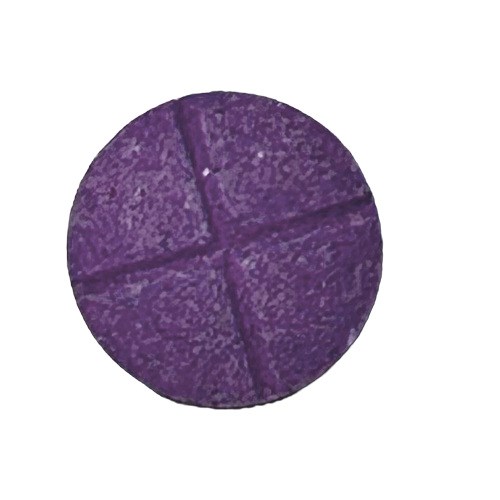
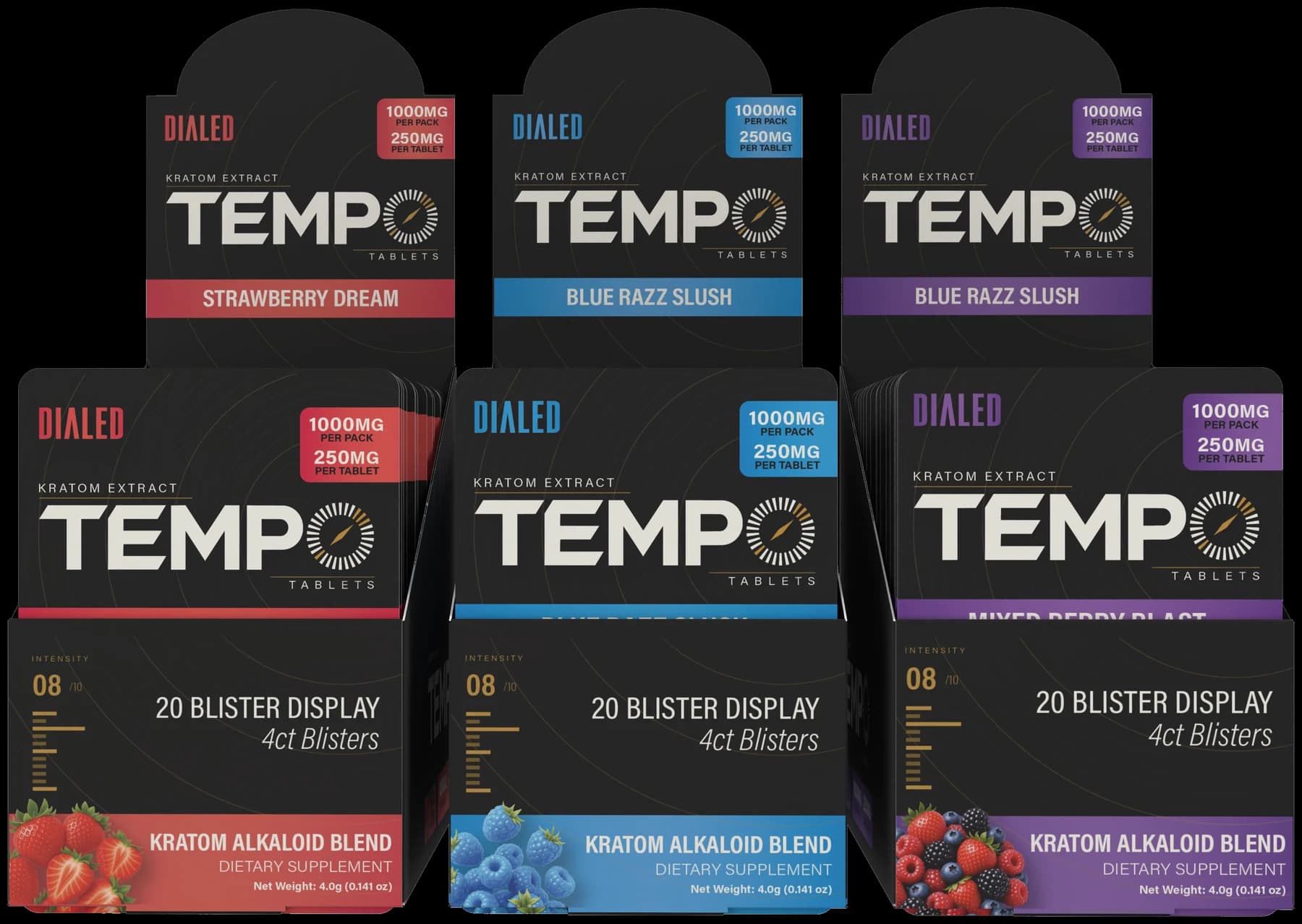
Each Tempo tablet carries 150 mg of mitragynine from a full-spectrum kratom leaf extract, 100 mg of paraxanthine and 30 mg of 13-OH corydalis extract (the pack label prints the kratom component as a 250 mg kratom alkaloid blend per tablet, 1000 mg per 4ct pack). That is a full, standardized extract serving, which is exactly why the tablet is cross-scored and why we tell everyone to start with half: 75 mg mitragynine, 50 mg paraxanthine and 15 mg 13-OH. The difference from powder isn't just strength; it's that the number is fixed and verified rather than estimated.
Because Tempo pairs the mitragynine with corydalis, a 150 mg Tempo tablet doesn't feel like 150 mg of leaf-only extract: fuller, with less edge. Start with a half regardless of your powder history, and wait 30–45 minutes before deciding anything. Dosing detail in how to take kratom extract tablets.
Stability and storage
Mitragynine is reasonably stable in a dry, pressed tablet kept at room temperature away from light and humidity. Heat, moisture and prolonged light exposure degrade it, and oxidation is one route by which trace 7-OH can increase over time, which is another reason to keep tablets sealed in their foil and respect the expiry date. Tempo's shelf life is printed on every pack and our stability testing informs it.
Why any of this matters when buying
Because mitragynine is what "strength" means in kratom, a product that doesn't tell you its mitragynine content in milligrams hasn't told you its strength. Look for the number on the label, look for it on a lot-specific COA, and look for the 7-OH result next to it. That's the whole test; the rest of the checklist is in nine things to check before you buy. Dialed's numbers are on the product page and at /coas.
Frequently asked questions
Is mitragynine a controlled substance?
Not federally, as of September 2026. The DEA's 2026 order scheduled 7-hydroxymitragynine above threshold, not mitragynine. Six states ban kratom outright, and state laws vary; see our state guide.
How many milligrams of mitragynine are in a gram of kratom?
Typically 8–18 mg, depending on the leaf. That range is why standardized extracts list mitragynine in mg instead of leaf in grams.
Does more mitragynine mean a better product?
No. It means a stronger one. Past a point, additional mitragynine tends to add harshness. Tempo delivers a full 150 mg mitragynine serving and uses corydalis to shape the experience rather than pushing the number higher.
Important
These statements have not been evaluated by the Food and Drug Administration. This product is not intended to diagnose, treat, cure, or prevent any disease. Not for use by anyone under 21. Keep out of reach of children. Do not use if pregnant or nursing. Consult a physician before use if you have a medical condition or take medication. Do not operate a vehicle or heavy machinery after use. Kratom products may be habit-forming; use responsibly.
This article is for general information only and is not medical, legal, or professional advice. Kratom laws change frequently — verify current rules in your state and locality before purchasing. Tempo by Dialed does not contain added 7-hydroxymitragynine; every lot is verified below the federal threshold. Must be 21+ to purchase.