Kratom comes in three mainstream formats: loose leaf powder, leaf-filled capsules, and pressed extract tablets. Each has real strengths, and each has a failure mode that the marketing for that format tends to skip. This is a working comparison, written by people who've used all three and now make one of them. Where we're biased, we'll flag it.
What each format actually is
- Powder is dried, milled kratom leaf. Nothing is concentrated; a 2 g scoop is 2 g of leaf.
- Capsules are that same powder in a gelatin or vegetable shell, usually 0.5–0.7 g of leaf per capsule. The capsule solves taste; it changes nothing about what's inside.
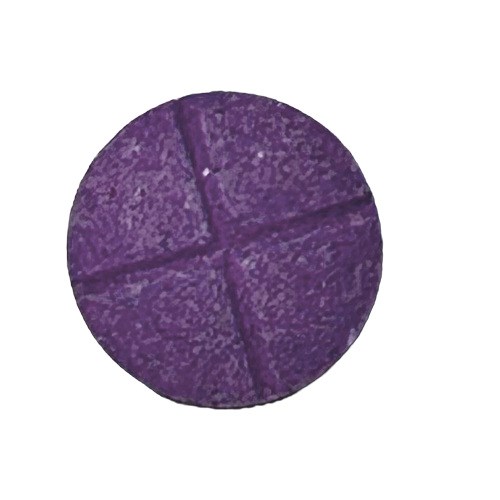
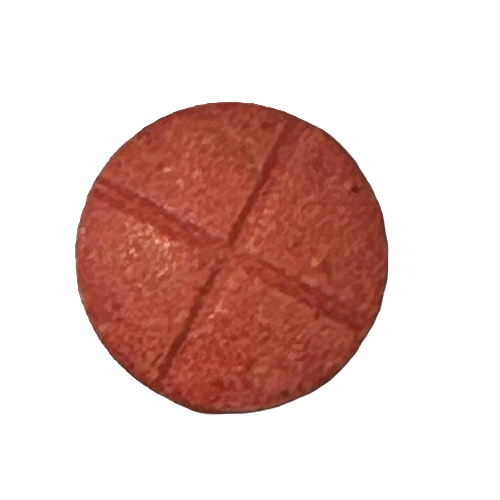
- Extract tablets are a concentrated kratom extract, standardized for mitragynine, pressed with binder and flavor into a solid tablet. Some are kratom-only; Tempo also includes 13-OH corydalis extract. See our complete tablet guide.
Dose accuracy: the biggest difference
Kratom's active content varies. Mitragynine in commercial leaf typically ranges from around 0.8% to 1.8% by weight depending on origin, harvest, drying, and the strain name that ended up on the bag. So:
| Serving | Leaf at 0.8% | Leaf at 1.3% | Leaf at 1.8% |
|---|---|---|---|
| 2 g powder (or ~3–4 capsules) | 16 mg mitragynine | 26 mg | 36 mg |
| 4 g powder | 32 mg | 52 mg | 72 mg |
| 1 Tempo tablet | 150 mg, verified on the lot COA (half tablet: 75 mg) | ||
That 16-to-36 mg spread for the same "2 gram" serving is why some bags feel like nothing and the next one from the same shelf feels like too much. Capsules inherit the same variance. A standardized extract tablet removes it: the mitragynine number is on the label and confirmed by an independent lab for that lot. If you only take one thing from this article, it's that a tablet lets you dose in milligrams rather than in guesses.
Cost per milligram of mitragynine
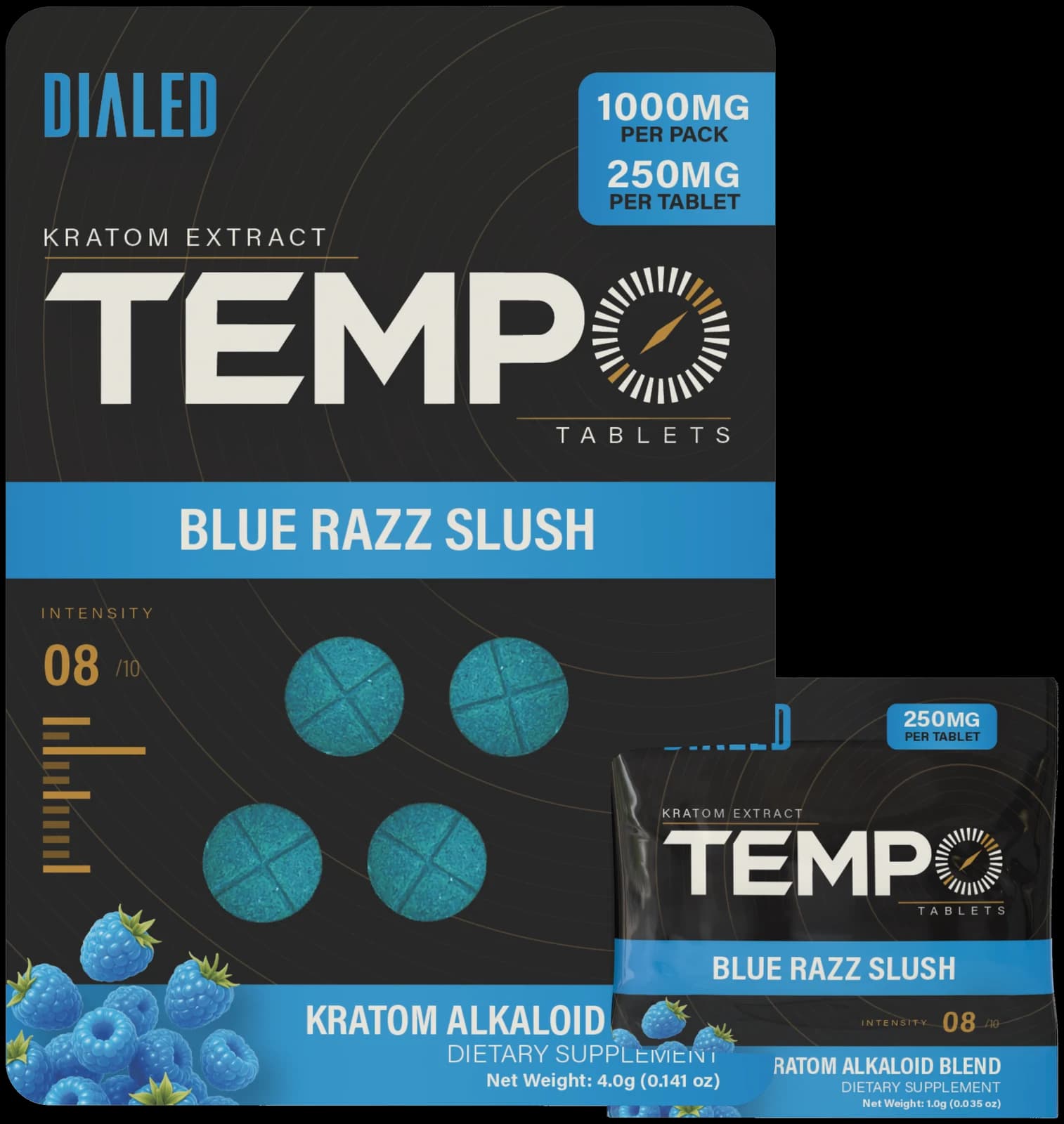
Powder wins on raw cost, and it's not close. A typical 250 g bag of decent leaf might run $30–45, which at 1.3% is roughly 3,250 mg of mitragynine, or about 1 cent per mg. Capsules cost more for the encapsulation, often 2–4 cents per mg. Extract tablets are highest: Dialed's Tempo 4ct blister at $24.99 works out to about 4 cents per mg of mitragynine, and that price also includes 100 mg of paraxanthine and 30 mg of corydalis extract per tablet, standardization, full-panel testing, flavoring and the tablet itself.
The way to think about it: if you're a high-volume daily powder user, tablets will feel expensive. If you take kratom a few times a week and value knowing what you took, the per-serving cost ($6.25 per tablet in a blister, $3.12 per half) is reasonable, and the money buys certainty rather than more leaf.
Taste
Powder tastes like powder: green, bitter, astringent, and it coats the mouth. "Toss and wash" is a skill, not a pleasure. Capsules eliminate taste until the shell dissolves, at which point some people get leaf-flavored reflux. Extract tablets are flavored: Tempo comes in Mixed Berry Blast, Blue Razz Slush or Strawberry Dream, sweetened with stevia, and the extract concentration means very little leaf mass is in the tablet to begin with. You can swallow it or chew it. This is a bigger quality-of-life difference than it sounds like.
Onset and duration
Powder in water tends to come on in 20–30 minutes because it's already dispersed. Capsules add 15–30 minutes while the shell dissolves and the powder wets, so 30–60 minutes is normal, and full-stomach capsule doses can be slow and uneven. Tablets sit in between: a pressed extract disintegrates quickly, and chewing it speeds things further, so expect roughly 20–40 minutes. Duration is broadly similar across formats at equivalent mitragynine doses; the blend in Tempo produces a somewhat smoother, more gradual tail in our experience. Details in onset, peak and duration.
Portability and discretion
A bag of powder is bulky, messy and hard to explain. Capsules are better but still need a bottle and still need counting. A foil sachet or blister card fits in a wallet. For travel within the US (never internationally, and never to a banned state), a labeled, sealed retail package is also the easiest thing to have in a bag.
Splitting a dose
Powder is infinitely divisible if you own a scale; most people don't use one. Capsules aren't practically splittable. A cross-scored tablet snaps into a clean half, and the half is a genuine serving: 75 mg mitragynine, 50 mg paraxanthine and 15 mg corydalis extract. A full tablet is a full, standardized extract serving, which is exactly why it's cross-scored and why we tell everyone to start with half; that makes tablets the best format for starting low, which is our standard advice for anyone new to extracts. See how to take kratom extract tablets.
Lab testing and contaminants
Raw leaf carries the most contamination risk: it's an agricultural product, and Salmonella and heavy-metal findings in powder have driven most of the kratom recalls on record. Capsules are only as clean as the powder in them. Extract tablets add a step (extraction and processing) that can reduce microbial load but introduces residual solvents as a thing to test for. Regardless of format, a lot-specific COA with a full panel is the standard. See how to read a kratom COA; Dialed's are at /coas.
7-OH context
Since August 5, 2026, 7-OH above 1.00 mg per unit is federally scheduled. Plain leaf powder and capsules were never near the threshold. Extract tablets need to be verified because concentration raises everything, including naturally occurring 7-OH. Reputable extract tablets, Tempo included, test each lot to prove they're under. Any "extract tablet" without a 7-OH result is a question mark. Background in Is 7-OH Banned?
Who each format is for
| You are... | Best fit |
|---|---|
| A daily, high-volume user optimizing for cost | Powder, with a scale and a tested source |
| Someone who wants leaf but can't stand the taste | Capsules |
| New to extracts, wants to start small and precise | Cross-scored extract tablet, half at a time |
| Leaving 7-OH products and wants something fuller than leaf | Extract tablet with 13-OH corydalis (our positioning) |
| Occasional user who values discretion and no measuring | Extract tablet in a sachet |
We make tablets, so we'll say plainly: if cost per milligram is your only variable, buy powder. If dose certainty, taste and portability matter, a tested extract tablet is worth it. You can try a Tempo 1ct sachet for $7.99 to see for yourself.
Frequently asked questions
Are kratom tablets the same as kratom pills or capsules?
"Pills" is a loose word. Capsules contain leaf powder in a shell; extract tablets are pressed, concentrated extract. They differ in dose accuracy, concentration and testing needs.
How many capsules equal one extract tablet?
There isn't a clean answer, and that variance is the point: capsule potency swings with the leaf, while a Tempo tablet is a fixed 150 mg of mitragynine verified on the COA. Treat a tablet as a full extract serving in its own right rather than converting it to capsules, and start with half.
Can I chew an extract tablet?
Tempo is flavored and can be chewed or swallowed. Chewing tends to speed onset slightly. Powder and capsules aren't designed to be chewed.
Important
These statements have not been evaluated by the Food and Drug Administration. This product is not intended to diagnose, treat, cure, or prevent any disease. Not for use by anyone under 21. Keep out of reach of children. Do not use if pregnant or nursing. Consult a physician before use if you have a medical condition or take medication. Do not operate a vehicle or heavy machinery after use. Kratom products may be habit-forming; use responsibly.
This article is for general information only and is not medical, legal, or professional advice. Kratom laws change frequently — verify current rules in your state and locality before purchasing. Tempo by Dialed does not contain added 7-hydroxymitragynine; every lot is verified below the federal threshold. Must be 21+ to purchase.