Search interest in "13-OH tablets" started climbing the week 7-OH products came off shelves, and a lot of that traffic is people assuming the two are versions of the same thing. They're not. This article puts them side by side on the things that matter: what's in them, whether they're legal, how they're dosed, how they're tested, and what people report about the experience.
The short version
| 7-OH tablets | 13-OH corydalis + kratom tablets (e.g. Tempo by Dialed) | |
|---|---|---|
| Active compound | 7-hydroxymitragynine, a kratom alkaloid (usually semi-synthetic isolate) | Mitragynine from full-spectrum kratom extract + 13-OH from Corydalis yanhusuo |
| Source plant(s) | Kratom (Mitragyna speciosa) | Kratom + corydalis (poppy family, unrelated to kratom) |
| Federal status (Sept 2026) | Schedule I above 1.00 mg/unit or 0.050% dry weight | Legal; 7-OH verified under threshold on each lot |
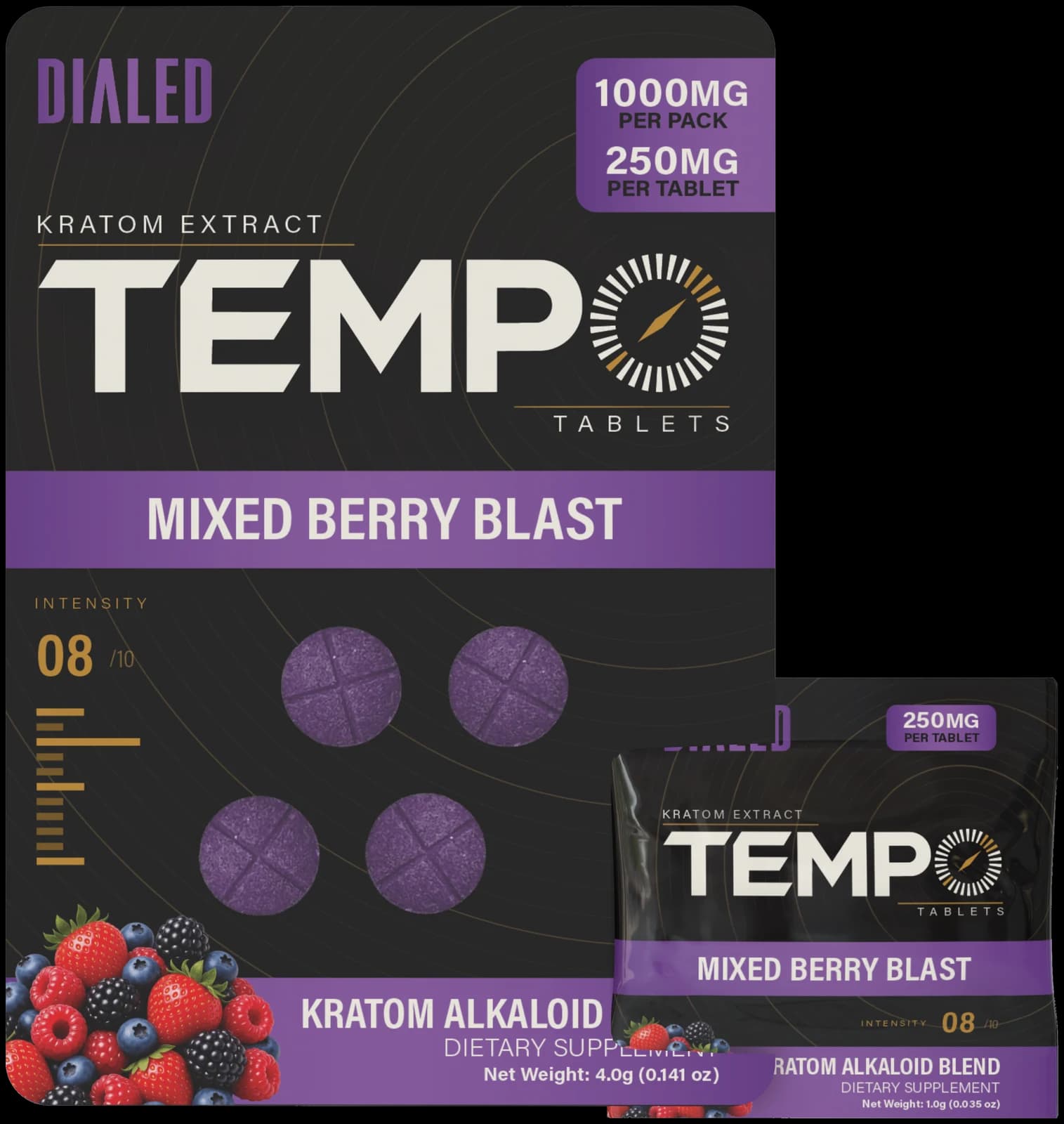
| Typical dose per tablet | 10–30 mg 7-OH | 150 mg mitragynine + 100 mg paraxanthine + 30 mg corydalis extract (pack label: 250 mg kratom alkaloid blend) |
| Spectrum | Isolate | Full-spectrum extract + botanical blend |
| Availability | Off compliant shelves | Online and Florida retail |
Chemistry: two different molecules from two different plants
7-OH is 7-hydroxymitragynine, a minor alkaloid in kratom leaf (typically well under 0.05% of dry leaf) and a metabolite of mitragynine. Most "7-OH tablets" sold in 2024–2025 contained far more 7-OH than any leaf could provide, which is why they were widely understood to be semi-synthetic: mitragynine converted to 7-OH in a lab, then pressed into tablets at 10–30 mg.
13-OH is a hydroxylated isoquinoline alkaloid derived from the rhizome of Corydalis yanhusuo. It is separated from the plant's better-known alkaloid tetrahydropalmatine (THP) by HPLC. It is not a kratom compound, not a mitragynine derivative, and not chemically related to 7-OH. The "-OH" in both names just indicates a hydroxyl group; the position numbers refer to completely different ring systems. Read What Is 13-OH? for the full background.
In a 13-OH tablet like Tempo, the kratom component is a full-spectrum extract standardized for mitragynine. So a "13-OH tablet" is really a kratom extract tablet with corydalis; the 13-OH is the second ingredient, not a stand-in for 7-OH.
Legality in 2026
As of August 5, 2026, the DEA's temporary order places 7-OH above 0.050% dry weight or 1.00 mg per unit in Schedule I for two years. Every 7-OH tablet we're aware of exceeded that by an order of magnitude, so the category is effectively prohibited. Sellers still offering them are operating outside the law. Full explanation in Is 7-OH Banned?
Kratom extract tablets with corydalis are legal federally as long as the naturally occurring 7-OH stays under the threshold, which is exactly what each Dialed COA verifies. Corydalis itself is not scheduled anywhere in the US. State kratom laws still apply (six states ban kratom; several have consumer-protection statutes), so check your state.
Dosing and dose control
7-OH tablets were dosed in milligrams of 7-OH, commonly 10, 15, 20 or 30 mg, and were often not scored. Because 7-OH is potent by weight, small labeling errors translated into large differences in effect, and independent testing of those products frequently found actual content well off the label.
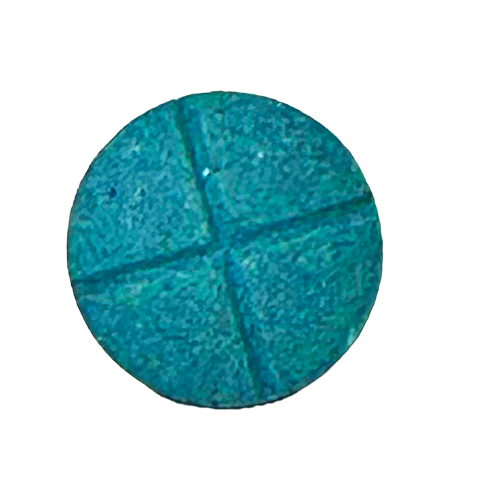
Tempo is dosed at 150 mg mitragynine, 100 mg paraxanthine and 30 mg corydalis extract per tablet, cross-scored so half is a real, repeatable serving. It is a full, standardized extract serving, which is exactly why the tablet is scored and why we tell everyone to start with half. Our dosing guidance is half a tablet to start, one tablet for an established serving, at least six hours between servings. See How to Take Kratom Extract Tablets.
Testing and transparency
Most 7-OH tablets shipped with either no COA or a COA that tested only 7-OH content, with no contaminant panel. Residual solvents were a real concern given how the compound was produced.
A properly made 13-OH kratom tablet should have a lot-specific, third-party COA covering mitragynine, 7-OH (under threshold; Tempo's reads not detected on every lot), corydalis assay with 13-OH resolved from THP, heavy metals, microbials, pesticides and residual solvents. That's the panel Dialed publishes. If a "13-OH tablet" from any brand lacks this, treat its label as unverified. Our COA guide walks through each line.
What people notice: fullness, harshness, tail
This is the part everyone wants, so let's be precise about what we can and can't say. We can't make medical claims, and we won't claim Dialed feels identical to 7-OH. What we can describe is the shape of the experience people report.
- 7-OH tablets were known for being fast, heavy and short, with a steep drop-off and a reputation for building tolerance quickly. Many users described them as "a lot, then nothing."
- Kratom-only extract tablets are smoother than 7-OH but can feel thin, and adding mitragynine to compensate tends to introduce harshness (queasiness, edge) before it adds fullness.
- 13-OH corydalis + kratom tablets are, in our own testing and early customer feedback, fuller than a kratom-only tablet at the same mitragynine dose, with reduced sensory harshness and a rounder, more gradual tail. Onset is closer to a standard extract than to 7-OH: expect 20–40 minutes, not 10. Details in onset and duration.
If your reference point is a 20 mg 7-OH tablet, the honest framing is: a 13-OH kratom tablet is smoother, more gradual and more sustainable, and it is not going to hit the same way. That's a feature for a lot of people and a disappointment for some. Read our switching guide for how to set expectations during the first week.
Which should you choose?
In September 2026 this is mostly a decided question: 7-OH tablets above threshold are Schedule I, and buying them exposes you to legal risk and to products from sellers who've already shown they'll ignore the rule. Among compliant options, the choice is between kratom-only extract tablets and blended tablets with 13-OH corydalis. If you want the simplest single-ingredient product, kratom-only is fine. If your complaint about plain kratom has always been "thin and harsh," the corydalis blend is built for exactly that. Our full ranking is in The Best 7-OH Alternatives in 2026, and you can try a Tempo 1ct sachet for $7.99 before committing to a Tempo 4ct blister.
Frequently asked questions
Is 13-OH just a legal version of 7-OH?
No. 13-OH is a corydalis compound from a different plant family with no chemical relationship to 7-OH. It's legal because it was never scheduled, not because it's a modified 7-OH.
Do 13-OH tablets contain any 7-OH?
Kratom extract can naturally carry trace 7-OH. Dialed tests every lot against the 1.00 mg per tablet and 0.050% dry weight limits, and 7-OH has come back not detected on every lot. We do not add 7-OH.
Will a 13-OH tablet feel as strong as a 7-OH tablet?
Not in the same way. Expect a smoother, fuller-than-leaf experience with a gradual onset and a softer tail rather than the fast, heavy, short profile 7-OH was known for.
Important
These statements have not been evaluated by the Food and Drug Administration. This product is not intended to diagnose, treat, cure, or prevent any disease. Not for use by anyone under 21. Keep out of reach of children. Do not use if pregnant or nursing. Consult a physician before use if you have a medical condition or take medication. Do not operate a vehicle or heavy machinery after use. Kratom products may be habit-forming; use responsibly.
This article is for general information only and is not medical, legal, or professional advice. Kratom laws change frequently — verify current rules in your state and locality before purchasing. Tempo by Dialed does not contain added 7-hydroxymitragynine; every lot is verified below the federal threshold. Must be 21+ to purchase.