"13-OH" is the least self-explanatory ingredient name in the kratom aisle, and the similarity to "7-OH" makes it worse. So here is the plain statement first: 13-OH is derived from the rhizome of Corydalis yanhusuo, a plant in the poppy family. It is not a kratom alkaloid. It is not 7-hydroxymitragynine or related to it. It is not a scheduled substance. Everything below expands on that.
The plant: Corydalis yanhusuo
Corydalis yanhusuo (yan hu suo) is a small flowering perennial native to eastern Asia. The part used is the rhizome, the underground stem, which is dried and has a long documented history in traditional East Asian herbal practice. Corydalis rhizome contains a family of isoquinoline alkaloids; the one most people have heard of is tetrahydropalmatine (THP), which has been sold as a standalone supplement for years.
Corydalis is botanically unrelated to kratom. Kratom (Mitragyna speciosa) is in the coffee family, Rubiaceae. Corydalis is in Papaveraceae, the poppy family, alongside plants like California poppy and bleeding heart. Being in the poppy family does not make it an opium poppy; it does not contain morphine or codeine, and it is not regulated as a controlled substance in the United States.
What "13-OH" refers to
13-OH is shorthand for a hydroxylated corydalis alkaloid, where "13-OH" describes the position of a hydroxyl group on the molecule's ring system. It's a naming convention chemists use, the same way "7-OH" describes the position of a hydroxyl group on mitragynine. The shared "-OH" suffix is the only thing the two have in common. Different plant, different backbone, different regulatory status.
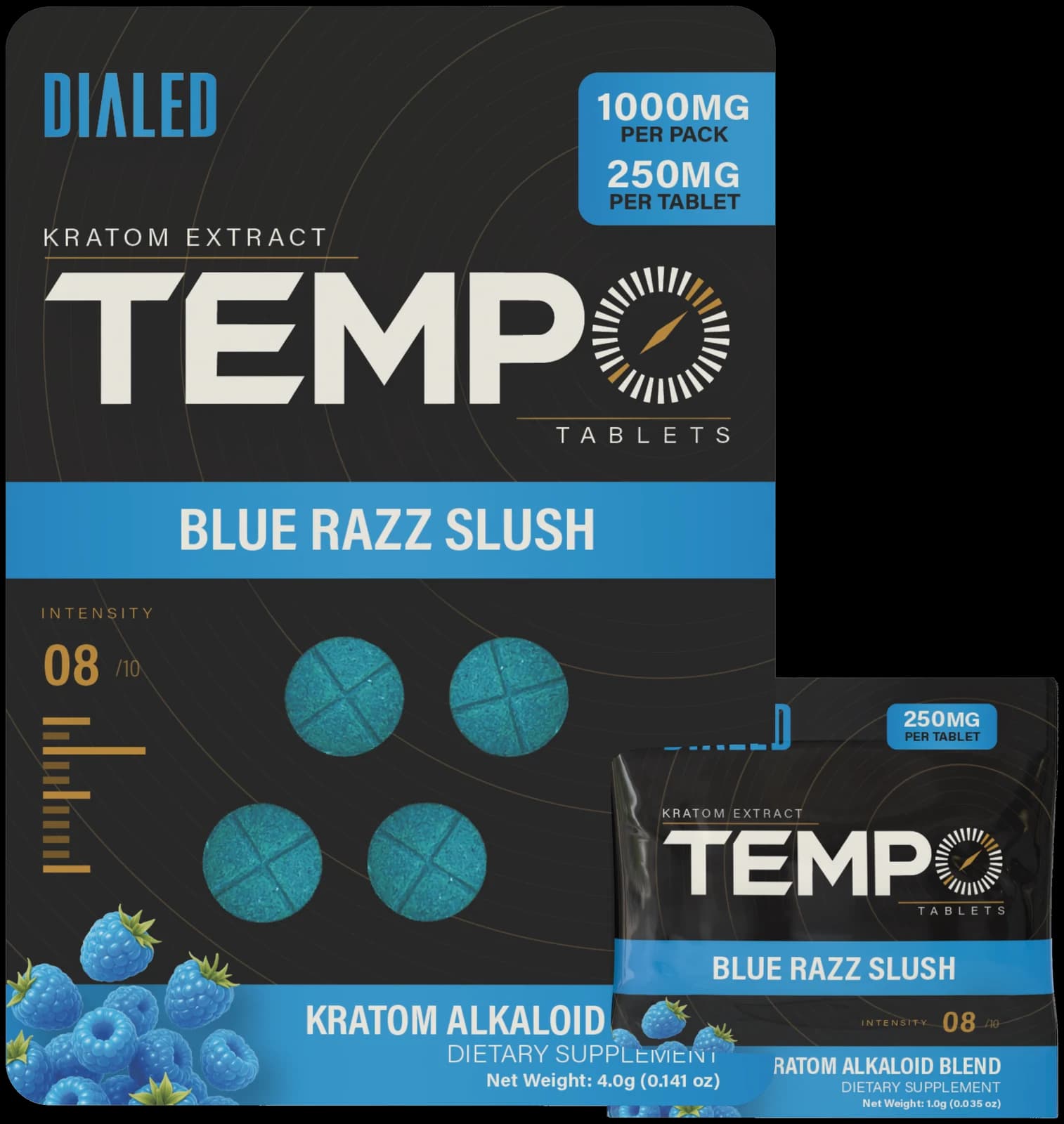
In Tempo, the 13-OH is supplied by Corydalis Labs (corydalislabs.com), who produce a standardized Corydalis yanhusuo extract characterized for 13-OH content. Their recommendation for use in a blended product is 25–40 mg of 13-OH per serving. Tempo's formula uses 30 mg of corydalis extract per tablet alongside 150 mg of mitragynine and 100 mg of paraxanthine (the pack label prints the kratom component as a 250 mg kratom alkaloid blend per tablet, 1000 mg per 4ct pack). Formula numbers are printed on the pack and confirmed on each COA.
13-OH vs tetrahydropalmatine (THP)
This distinction matters because a lot of "corydalis extract" on the market is either crude rhizome powder or a THP-standardized extract. Those are different products from a 13-OH-characterized extract.
| 13-OH extract (Corydalis Labs) | THP-standardized extract | Crude corydalis powder | |
|---|---|---|---|
| Primary marker compound | 13-OH | Tetrahydropalmatine | None (whole rhizome) |
| How it's verified | HPLC, 13-OH separated from THP | HPLC for THP | Usually identity only |
| Typical use | Blends, e.g. with kratom extract | Standalone sleep/relaxation supplements | Traditional preparations |
| Serving guidance in blends | 25–40 mg (supplier) | Varies widely | Grams |
The reason the HPLC separation is emphasized: THP and 13-OH sit close together in a chromatogram, and a lab that isn't set up to resolve them can report one as the other. A proper corydalis assay for a 13-OH product resolves the two peaks and reports them separately. That's what appears on Dialed's COA under the corydalis line.
Why 13-OH is in a kratom tablet
Kratom extract on its own has a familiar shape: at a serving that suits the person it's pleasant and useful; push the dose up and the experience tends to get harsher (queasiness, a wired edge, a sharper tail) before it gets fuller. Formulators have historically solved that by adding more mitragynine anyway, or, in 2024–2025, by adding 7-OH, which is now scheduled above threshold.
13-OH takes a different route. In a blend, it lets a full 150 mg mitragynine serving feel rounder and fuller, with what we describe as reduced sensory harshness: rounder onset, less edge, smoother finish. Because the fullness comes from a second, non-kratom botanical rather than from pushing the kratom number even higher, the tablet delivers a complete, standardized extract serving and stays comfortably under the federal 7-OH line. That's the whole design logic of Dialed. We go deeper in Corydalis + Kratom: Why the Pairing Works.
We want to be careful with language here. We're describing how the product feels and why it's formulated the way it is. We are not claiming that 13-OH or corydalis treats any condition, and any product that does is making a claim it can't legally make.
Safety, testing and what's on the COA
Corydalis extract in Tempo goes through the same finished-product testing as the kratom extract. Each lot's certificate of analysis reports:
- Corydalis extract content per tablet, with 13-OH resolved from THP by HPLC
- Mitragynine per tablet (150 mg target)
- 7-hydroxymitragynine per tablet, not detected on every lot (federal limit 1.00 mg / 0.050% dry weight)
- Heavy metals (Pb, As, Cd, Hg), microbials, pesticides, residual solvents
Corydalis is a botanical with its own cautions. It's not for anyone under 21, not for use during pregnancy or nursing, and anyone with a medical condition or on medication should consult a physician before use. Those warnings are on every pack. Our COA guide shows where the corydalis line sits on the report.
How much 13-OH is in a serving
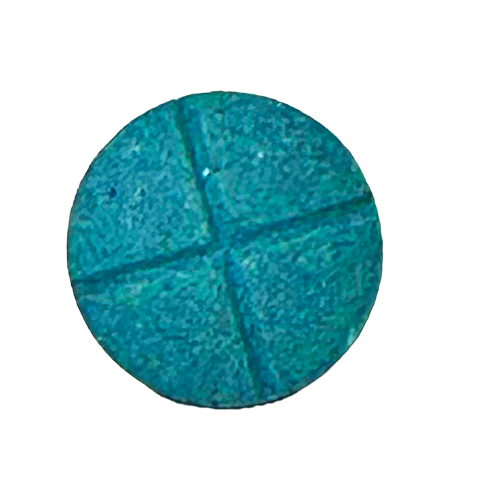
Tempo's cross-score keeps the ratio intact at every fraction: a full tablet delivers 30 mg of corydalis extract with 150 mg mitragynine and 100 mg paraxanthine; a half delivers 15 mg with 75 mg mitragynine and 50 mg paraxanthine; a quarter, 7.5 mg with about 37 mg mitragynine. The supplier's 25–40 mg guidance applies to a full serving, which is why a full tablet sits in the middle of it and a half is deliberately below. If you're comparing Tempo to another product that lists "corydalis" on the label, ask two questions: how many milligrams, and is it a 13-OH-characterized extract or THP or whole rhizome powder? A product listing "corydalis 100 mg" of crude powder contains far less of any specific alkaloid than 30 mg of a standardized extract, and a THP-standardized extract is a different ingredient entirely.
Legal status
Corydalis yanhusuo and its alkaloids, including THP and 13-OH, are not controlled substances under federal law and are not covered by the DEA's 7-OH order, which is specific to 7-hydroxymitragynine. Corydalis has been sold in the US as a dietary ingredient for decades. State kratom laws apply to Dialed because it contains kratom, not because it contains corydalis. See our state guide.
The name problem, addressed directly
Because "13-OH" sounds like "7-OH," some retailers and customers assume it's a workaround, a new number on the same molecule. It isn't. If it were a kratom alkaloid it would be tested under the kratom panel; instead it's tested under a separate corydalis assay from a separate supplier. If you see a product using "13-OH" to imply it's a 7-OH substitute in the chemical sense, that's marketing, not chemistry. Tempo uses 13-OH because it does a specific job in a blend, and we positioned the tablet as a 7-OH alternative because it's the closest compliant product we know how to make, not because the numbers rhyme.
Frequently asked questions
Is 13-OH a kratom alkaloid?
No. It is derived from Corydalis yanhusuo rhizome, a plant in the poppy family, and has no chemical relationship to mitragynine or 7-hydroxymitragynine.
Is corydalis or 13-OH a scheduled substance?
No. Neither corydalis nor its alkaloids are controlled substances in the US, and the DEA's 2026 order applies only to 7-hydroxymitragynine.
How much 13-OH is in a Tempo tablet?
Each tablet contains 30 mg of Corydalis Labs' 13-OH corydalis extract, within the supplier's recommended 25–40 mg range for blends, alongside 150 mg of mitragynine and 100 mg of paraxanthine. Half a tablet delivers half of each.
Important
These statements have not been evaluated by the Food and Drug Administration. This product is not intended to diagnose, treat, cure, or prevent any disease. Not for use by anyone under 21. Keep out of reach of children. Do not use if pregnant or nursing. Consult a physician before use if you have a medical condition or take medication. Do not operate a vehicle or heavy machinery after use. Kratom products may be habit-forming; use responsibly.
This article is for general information only and is not medical, legal, or professional advice. Kratom laws change frequently — verify current rules in your state and locality before purchasing. Tempo by Dialed does not contain added 7-hydroxymitragynine; every lot is verified below the federal threshold. Must be 21+ to purchase.